 Personal Growth
 The Difference Between ‘Being Nice’ and ‘Being Friendly’
In the complex terrain of human interactions, the terms ‘being nice’ and ‘being friendly’ are often used interchangeably. Yet, beneath their apparent similarity lies a significant difference that shapes our relationships and how we navigate the world. While both qualities are generally seen as positive, they manifest in distinct ways and come with their own sets of psychological implications. One, ‘being nice,’ can be rooted in a desire to please others and avoid conflict, often leading to self-sacrifice and a tendency to be a doormat. The other, ‘being friendly,’ is a more grounded, authentic trait, stemming from a genuine desire to connect and build relationships, but with clear boundaries that ensure respect.
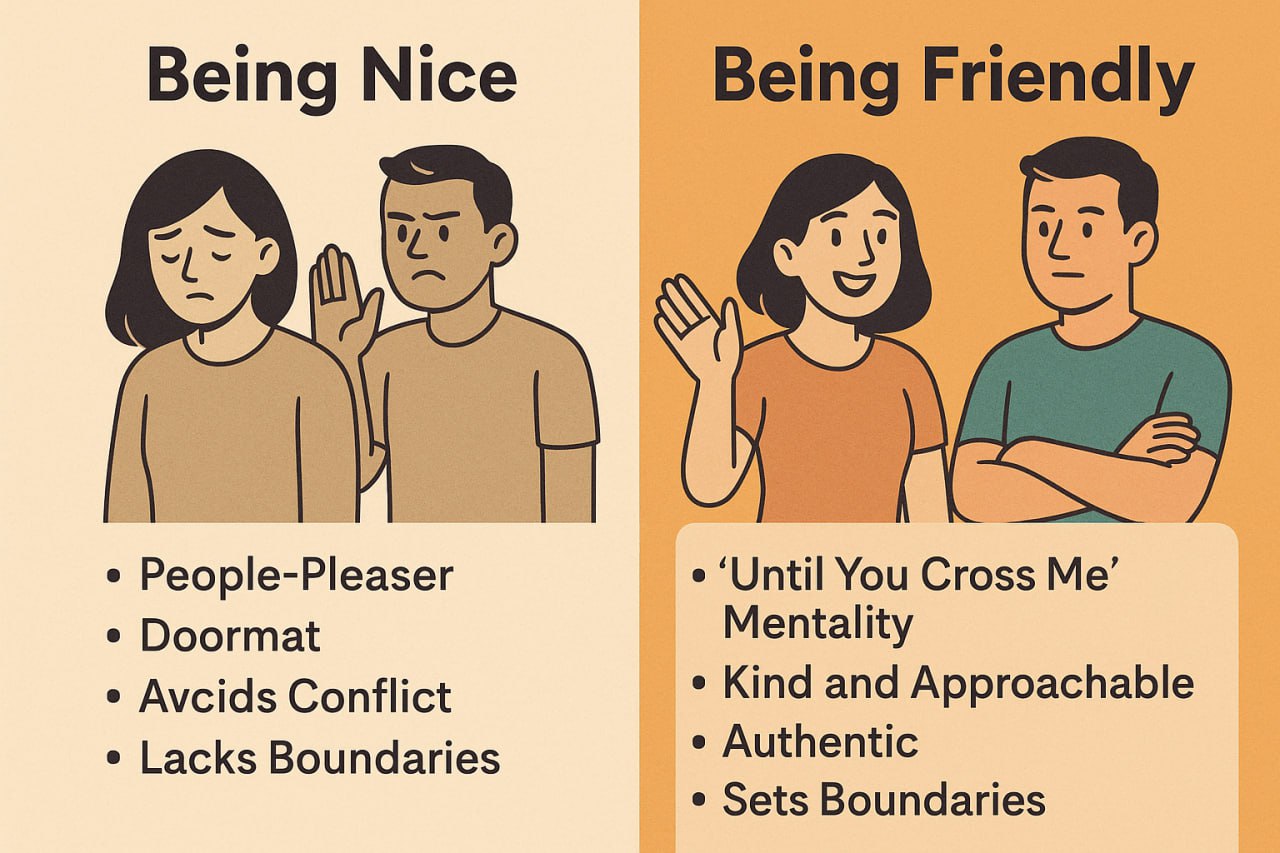
Being Nice: The People-Pleaser and Doormat
When we talk about someone being “nice,” we often refer to a person who goes out of their way to avoid conflict and make others feel comfortable, often at their own expense. This niceness, however, can sometimes mask deeper insecurities or a desire to be liked. People who identify as ‘nice’ tend to agree with others, even when it conflicts with their own opinions or desires. The overriding motivation here is to maintain peace and harmony, even if it means suppressing their true feelings.
At its core, niceness can stem from a people-pleasing mentality. People-pleasers are often willing to disregard their own needs in favour of meeting the expectations of others. They fear rejection or disapproval and thus, act in a way that they believe will ensure others’ approval. For them, being ‘nice’ is less about authentic interaction and more about trying to keep others happy. While their intentions may be rooted in kindness, this mindset can easily lead to a lack of self-assertion and personal boundaries. A person who is constantly ‘nice’ may find themselves overburdened with the demands of others because they struggle to say ‘no.’ As a result, this excessive niceness can lead to feelings of resentment, burnout, and emotional exhaustion.
This mindset can also lead to a doormat-like mentality, where an individual allows themselves to be taken advantage of by others. They may continuously put the needs of others before their own, and in doing so, create relationships based on imbalance and emotional inequity. The fear of rocking the boat or upsetting others becomes more important than standing up for themselves or their own needs. Over time, this can cause a person to feel devalued, lost, and disconnected from their authentic self. In many ways, being nice without clear boundaries becomes a cycle of self-denial, which can inhibit both personal growth and genuine connection with others.
Being Friendly: Boundaries and Authenticity
In contrast, ‘being friendly’ is an approach to social interactions that is rooted in authenticity and respect for oneself and others. Friendly people are kind, approachable, and open, but they do not bend over backward to please everyone around them. Their friendliness is not a means of gaining approval or avoiding conflict but a natural expression of warmth and engagement. They offer kindness, but only within the context of mutual respect and understanding.
A friendly person is willing to engage with others, listen attentively, and show compassion. However, they also recognise the importance of healthy boundaries. They understand that their own needs, desires, and limitations are just as valid as those of the people they interact with. Being friendly doesn’t require sacrificing one’s integrity or saying ‘yes’ when they really mean ‘no.’ A friendly individual can engage in meaningful conversations and offer support but will also communicate when something is not acceptable to them. The key difference here is that their friendliness comes from a place of self-respect and genuine connection, not from a desire to be liked at any cost.
“The ‘until you cross me’ mentality is a more subtle but integral aspect of being friendly. It doesn’t imply hostility or confrontation but reflects an unspoken understanding that respect is mutual.”
A friendly person may give their time, energy, and attention generously, but they will not tolerate mistreatment or disrespect. They recognise their worth and will assert themselves when necessary. Unlike the people-pleaser, a friendly individual has learned the importance of both self-care and care for others. They understand that relationships are based on give and take, and they are not afraid to establish boundaries that protect their emotional well-being.
The Psychological Impact of Both Traits
The psychological impact of ‘being nice’ versus ‘being friendly’ is significant. People who are overly nice may develop anxiety or stress from their constant need to please others. They may struggle with feelings of inadequacy or guilt when they feel they are not meeting others’ expectations, and they often carry an unspoken fear of rejection. This can create an internal conflict where they feel unable to express their true selves, resulting in emotional repression and frustration.
On the other hand, friendly individuals often experience greater emotional resilience because their kindness comes from a more authentic and balanced place. Their ability to set boundaries and communicate openly contributes to a stronger sense of self-worth and personal empowerment. Because they are not constantly seeking external validation, they are more likely to form genuine and mutually fulfilling relationships, which are grounded in respect and trust.
Conclusion
In summary, while both ‘being nice’ and ‘being friendly’ involve positive traits, they represent two very different approaches to human interaction. Being nice often stems from a desire to please others, sometimes at the expense of one’s own needs and boundaries, which can lead to emotional exhaustion and resentment. Being friendly, on the other hand, is about offering warmth and kindness while maintaining respect for oneself and others. It involves the ability to connect with others without compromising one’s integrity or sense of self. By understanding the difference between these two traits, individuals can cultivate more authentic and balanced relationships that nurture both their emotional well-being and their connections with others.
May you find the wisdom to discern between kindness that comes from fear and kindness that flows from strength. May you embrace the courage to be genuinely friendly rather than merely nice, knowing that authentic connection requires both warmth and boundaries.
In service to your authentic becoming,
Nadia
If this wisdom resonated with you, consider supporting the mission.


If this wisdom resonated with you, consider supporting the mission.


Stay in the loop
Join the circle and be the first to know when a new article is published or a new free e-book drops.
No spam. No selling your details. Just meaningful updates, when there's something worth sharing.
Unsubscribe anytime, one click, no questions asked.
You're in, welcome! 🌸
You'll hear from Nadia when something new is ready for you, a fresh article, a new e-book, or a moment of wisdom worth passing on.