 Neuroscience & Wellness
 Orthorexia: Rising Obsession, Wellness Balance
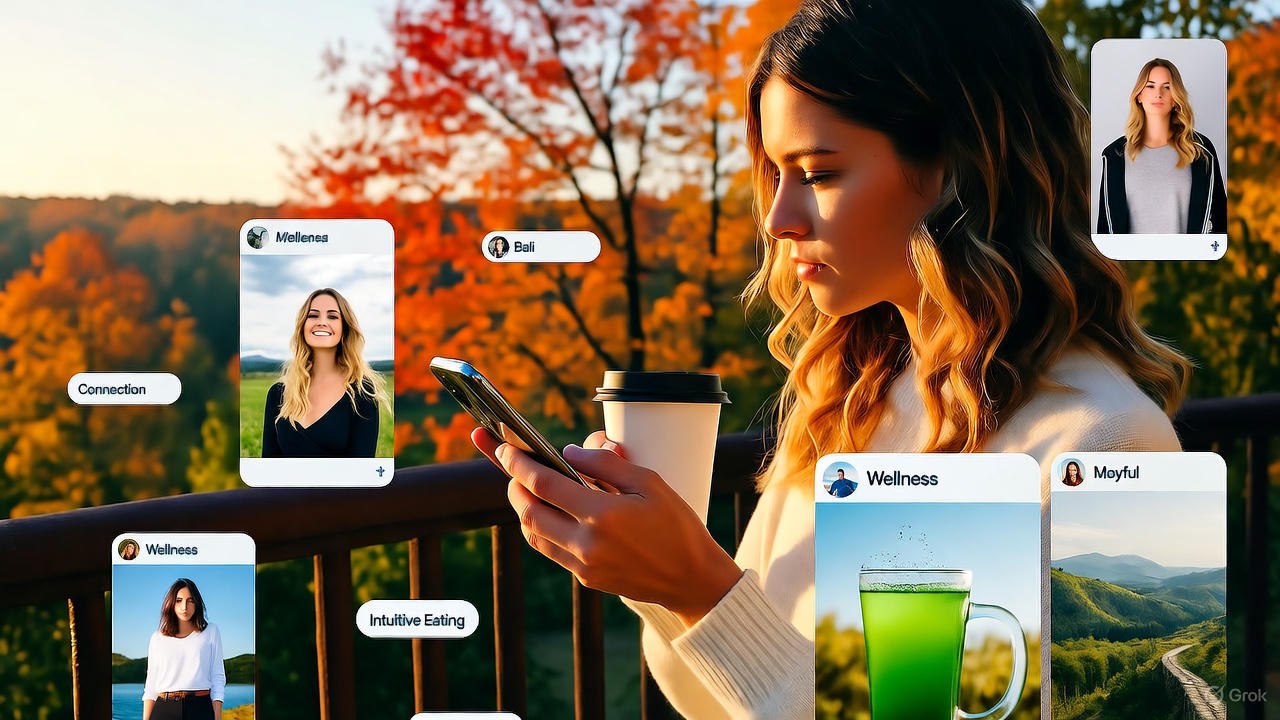
Imagine this: It’s 7 a.m. on a crisp autumn morning, and you’re doom-scrolling through your feed, coffee in hand,black, no sugar, because rules. There she is again, your favorite wellness guru, perched on a sun-drenched balcony in Bali, cradling a mason jar of emerald-green elixir that promises eternal vitality. “Start your day with this gut-healing, inflammation-busting superfood blend,” she purrs in the caption, her skin glowing like it’s been Photoshopped by the gods. Hashtags cascade: #CleanEating #WellnessWarrior #NoToxinsNoLimits. You pause, heart quickening. Am I doing enough? That bagel from yesterday? A betrayal. The pizza night with friends last weekend? A full-scale revolt against your body.
You like the post. You save it. And somewhere, deep in the quiet chambers of your mind, a tiny voice whispers: What if purity is the only path to peace?
Welcome to the seductive spiral of orthorexia,a term that’s been bubbling under the surface of our hyper-curated digital lives, now erupting into a full-blown crisis. It’s not just about eating “clean”; it’s the obsession that turns nourishment into a prison. In this deep dive, we’ll unravel how orthorexia is surging, fueled by the relentless glow of online influencers peddling unattainable ideals. We’ll peer into its shadowy twinship with classic eating disorders like anorexia and bulimia, revealing how the quest for health can mirror the grip of restriction and shame. And most crucially, we’ll reclaim the messy, magnificent truth: True well-being isn’t a flawless filter,it’s a mosaic of balance, grace, and gentle rebellion. Because while balance is the golden thread, it’s woven differently for every soul, and for some, the loom feels impossibly heavy.
Buckle up. This isn’t a lecture; it’s a lantern in the fog. Let’s step into the light together.
The Allure of Purity: What Exactly is Orthorexia?
Picture a world where food isn’t fuel,it’s a moral battlefield. Orthorexia nervosa, coined in 1997 by physician Steven Bratman, isn’t about calories or scales; it’s an unrelenting fixation on “pure” eating. Foods are labeled good or evil: Quinoa and kale reign supreme, while anything processed, carb-loaded, or,gasp,enjoyed for sheer pleasure becomes the enemy. Sufferers don’t chase thinness; they pursue righteousness through restriction. Breakfast might be a meticulously portioned smoothie of organic spirulina and almond milk, lunch a salad so sparse it echoes, dinner a ritual of steamed veggies that leaves you hollow not just in body, but in spirit.
At first glance, it masquerades as virtue. Who wouldn’t want to be healthier? But the line blurs when grocery shopping becomes a two-hour ethical audit, when dining out triggers panic attacks over hidden “toxins,” or when social invitations evaporate because “my diet doesn’t allow it.” As Bratman himself warned in his seminal work, “Orthorexia begins innocently enough, as a desire to overcome illness and eat healthily. But because it is inflexible and takes precedence over all other facets of life, it can become obsessive and lead to social isolation, nutritional deficiencies, and even dangerous weight loss.”
It’s immersive, this world,seductive in its promise of control amid chaos. You start following one influencer for “easy meal prep hacks,” and suddenly your algorithm is a vortex of bone broth cleanses and intermittent fasting testimonials. But beneath the aspirational aesthetics lies a quiet erosion: joy leached from meals, relationships strained by unspoken judgments, a body starved not of food, but of freedom.
The Surge: Why Orthorexia is Exploding in Our Feeds (And Our Lives)
Fast-forward to 2025, and orthorexia isn’t a fringe concern,it’s a tidal wave crashing over our collective consciousness. Recent studies paint a stark picture: In the general population, estimates hover around 6.9% grappling with orthorexic tendencies, but among fitness enthusiasts and dieters, that skyrockets to 35-57%. A November 2023 meta-analysis, echoed in 2025 follow-ups, found that roughly 3 in 10 young adults exhibit orthorexic symptoms, often undiagnosed because it hides in plain sight as “discipline.” Globally, eating disorder prevalence has doubled from 3.5% in 2018 to 7.8% today, with orthorexia riding the crest as a “new-age” variant.
What’s fueling this fire? Enter the influencers,the digital deities of detox. Social media isn’t just amplifying orthorexia; it’s engineering it. A 2023 study in Appetite revealed that users deeply engaged with health and fitness accounts show significantly higher orthorexic eating patterns, with Instagram emerging as the prime culprit. Higher Instagram usage correlates directly with orthorexic risk,no other platform packs the same visual punch. Think about it: Endless reels of flawless bodies fueling on celery juice, captions preaching “Your body is your temple,don’t pollute it.” One scroll through X (formerly Twitter) uncovers raw confessions: “It’s this trend of new age wellness and orthorexia. Instead of eating, these influencers supplement themselves with IVs and sea moss,” laments user @morriconeINC, echoing a sentiment rippling through threads.
Influencers like those glamorizing “quasi-recovery” or extreme clean eating aren’t villains,they’re products of the same system. As @maelstrommar notes on X, “there are 2 types of recovery influencers, orthorexia and binge eating disorder,” highlighting how the pursuit of “healing” often veers into obsession. A 2025 Cleveland Clinic report ties it back to body dissatisfaction: “Social media exposure leads to body dissatisfaction, which in turn increases risk for eating disorders,” says psychologist Kasey Goodpaster, PhD. And it’s not abstract,it’s personal. @AnaKasparian2 calls out the pathology: “The modern health food obsessions screams orthorexia… RFK Jr and many other popular health influencers suffer from it.”
In a post-pandemic haze, where anxiety spiked and screens became sanctuaries, these voices promised salvation through smoothies. But as a 2025 Guardian piece warns, “Anxious preoccupation with the safety and purity of food is a form of disordered eating called orthorexia,” often overlooked because it cloaks itself in empowerment. The result? A generation chasing vitality, only to find exhaustion.
Flipping the Coin: Orthorexia’s Eerie Echoes in Anorexia and Bulimia
Here’s the gut-punch: Orthorexia isn’t the “healthy” outlier,it’s the stealthy sibling to anorexia and bulimia, two sides of the same tarnished coin. All three thrive on control, restriction, and a relentless inner critic that equates worth with willpower. In anorexia, the scale dictates destiny; in bulimia, binges and purges chase fleeting relief; in orthorexia, the “clean” label becomes the altar. But peel back the layers, and the anatomy is strikingly similar.
Both orthorexia and anorexia hinge on rigid food rules, fostering anxiety and isolation when “violated.” A 2021 study in BMC Psychiatry found orthorexics share anorexics’ excessive focus on diet, with 75% exhibiting overlapping restrictive behaviors. Bulimia enters the fray through the guilt cycle: Just as bulimics purge to atone for “bad” eats, orthorexics might fast or detox after a “slip,” spiraling into shame. “Individuals who pursue a diet share similarities with those who have an eating disorder related to ON positive emotions, behaviors, and problems,” notes a 2021 Eating and Weight Disorders review, underscoring how the high of “purity” mimics the anorexic’s weight-loss euphoria.
Yet, the deception deepens because orthorexia whispers, This is progress, not pathology. As @hachiwarevie vents on X, “fitness influencers for anorexia or orthorexia” normalize the extremism, blurring lines with mukbangers glorifying binge-like excess. Healthline’s 2023 overview captures it: “People with BED have symptoms similar to those of bulimia… Although orthorexia is increasingly mentioned in the media, it’s not yet an official diagnosis.” The coin’s flip? What starts as self-care curdles into self-sabotage, eroding mental health across the board,depression, anxiety, even suicidal ideation in severe cases.
Experts like Dr. Phil Maffetone cut through the haze: “Orthorexia nervosa is an eating disorder associated with fanatical behavior regarding food quality, and a true obsession leading to an unhealthy outcome.” It’s a reminder: Extremes don’t discriminate; they devour.
The Elusive Dance of Balance: A Key That’s Not One-Size-Fits-All
Ah, balance,the buzzword bandied about like a cure-all. Eat the cake and the kale. Indulge and illuminate. But let’s be real: For many, balance isn’t a buoyant waltz; it’s a tightrope over an abyss, especially when trauma, neurodivergence, or chronic illness tilt the scales. As @fivesbunny shares on X, “recovery influencers are 90% of the time in quasi, switching to orthorexia… you’re doing amazing despite the challenges.” Not everyone can “just moderate”,and that’s not failure; it’s human.
True equilibrium honors the whole: physical vitality intertwined with mental resilience, emotional fluency, and spiritual spark. It’s not perfection; it’s presence. As recovery advocate Dr. Anita Johnston poeticizes, “Making peace with food requires that you transition from a place of fear to a place of love.” For some, that means therapy-fueled baby steps; for others, community rituals that reframe food as communion. The key? It’s yours to forge, not force.
Reclaiming Radiance: Simple, Soul-Nourishing Steps to Holistic Well-Being
You don’t need a 30-day cleanse or a guru’s blueprint. Well-being blooms in the small, the sustainable,the whispers that say, You are enough, right here. Drawing from the eight dimensions of wellness, here’s a roadmap: Bite-sized, holistic, and utterly do-able. Start with one. Let it ripple.
Physical: Tune In, Don’t Tighten Up
Your body craves movement as play, not punishment. Swap the HIIT grind for a 10-minute dawn walk,barefoot if you dare, feeling earth kiss your soles. Fuel intuitively: Next meal, pause before plating. Ask, What sounds nourishing today? Not pure, not perfect,just alive. Track wins, not weigh-ins: “I savored that apple’s crunch.” As the National Wellness Institute affirms, physical wellness “fuels the body” through joyful motion and intuitive eating.
Mental: Quiet the Critic, Amplify the Ally
The mind’s a garden,weed the orthorexic echoes with daily micro-meditations. Try the 4-7-8 breath: Inhale for 4, hold 7, exhale 8. Five minutes, eyes soft on a candle flame. Journal one “permission slip”: “Today, I permit pasta without penance.” Psychology Today’s five cornerstones highlight stress management as key,pair it with a “worry window,” 15 minutes to offload fears, then close the book. Remember Johnston’s wisdom: “Recovery is about loving myself… even when I am struggling.”
Emotional: Feel It All, Without the Flood
Emotions aren’t intruders,they’re messengers. When guilt gurgles post-“indulgence,” name it: “Hello, shame. What do you need?” Follow with a self-soothing ritual: Warm tea in a favorite mug, or a playlist that hugs your heart. UC Davis’s emotional wellness pillar urges “awareness of your feelings and response to everyday interactions.” Build resilience with “emotion bingo”: Spot three feelings daily, no judgment. It’s vulnerability as victory.
Social & Interpersonal: Connection Over Comparison
Log off the ‘Gram for a “no-filter feast”,invite a friend for takeout, no photos, just presence. Share a story, not a smoothie recipe. Triumph Behavioral Health’s dimensions emphasize “building satisfying relationships” as the glue. Curate your feed: Unfollow the extremists, follow body-positive voices. One X user quips, “I’m allowed to call out mukbangers… just as fitness influencers get called out.” Reclaim your circle.
Spiritual & Intellectual: Seek Wonder, Not Worship
Nurture the soul with curiosity: Read a poetry collection on nature’s abundance, or stargaze sans apps. Ask, What makes my spirit sing? St. Catherine University’s holistic view ties spiritual wellness to “nurturing the spirit.” Intellectually, dive into one “anti-diet” podcast episode weekly,let ideas ferment like good sourdough.
Environmental & Financial: Ground in the Now
Create a “sanctuary snack spot”,a cozy corner stocked with varied treats, no labels. Financially, budget for joy: $5 weekly for a treat that delights, guilt-free. Ask The Scientists’ pillars include environmental harmony,tend a windowsill herb, connecting to earth’s generosity.
These aren’t mandates; they’re invitations. Stack ’em like Lego bricks,start small, celebrate the click.
Dawn After the Detox: Your Invitation to Thrive
As the sun dips low, casting golden hues over your imperfect plate, remember: Well-being isn’t a destination,it’s the flavor of the feast, the laughter in the mess, the quiet knowing that you are the ultimate nourishment. Orthorexia’s rise is a siren song, amplified by influencers’ halos, but its harmony with anorexia and bulimia reminds us: Extremes isolate; integration liberates.
You’re not broken for craving the clean. You’re brave for questioning it. Balance may bend for you, not break you,and in that flexibility lies your power. So tonight, raise a glass (or a cookie) to the wild, wondrous you. The world needs your full-spectrum glow.
What’s one step you’ll savor tomorrow? Drop it in the comments,let’s build this mosaic together.
If this wisdom resonated with you, consider supporting the mission.


References: All citations drawn from peer-reviewed studies (e.g., Appetite, BMC Psychiatry), expert insights (e.g., Cleveland Clinic, Guardian), and real-time X discourse.
If this wisdom resonated with you, consider supporting the mission.


Stay in the loop
Join the circle and be the first to know when a new article is published or a new free e-book drops.
No spam. No selling your details. Just meaningful updates, when there's something worth sharing.
Unsubscribe anytime, one click, no questions asked.
You're in, welcome! 🌸
You'll hear from Nadia when something new is ready for you, a fresh article, a new e-book, or a moment of wisdom worth passing on.