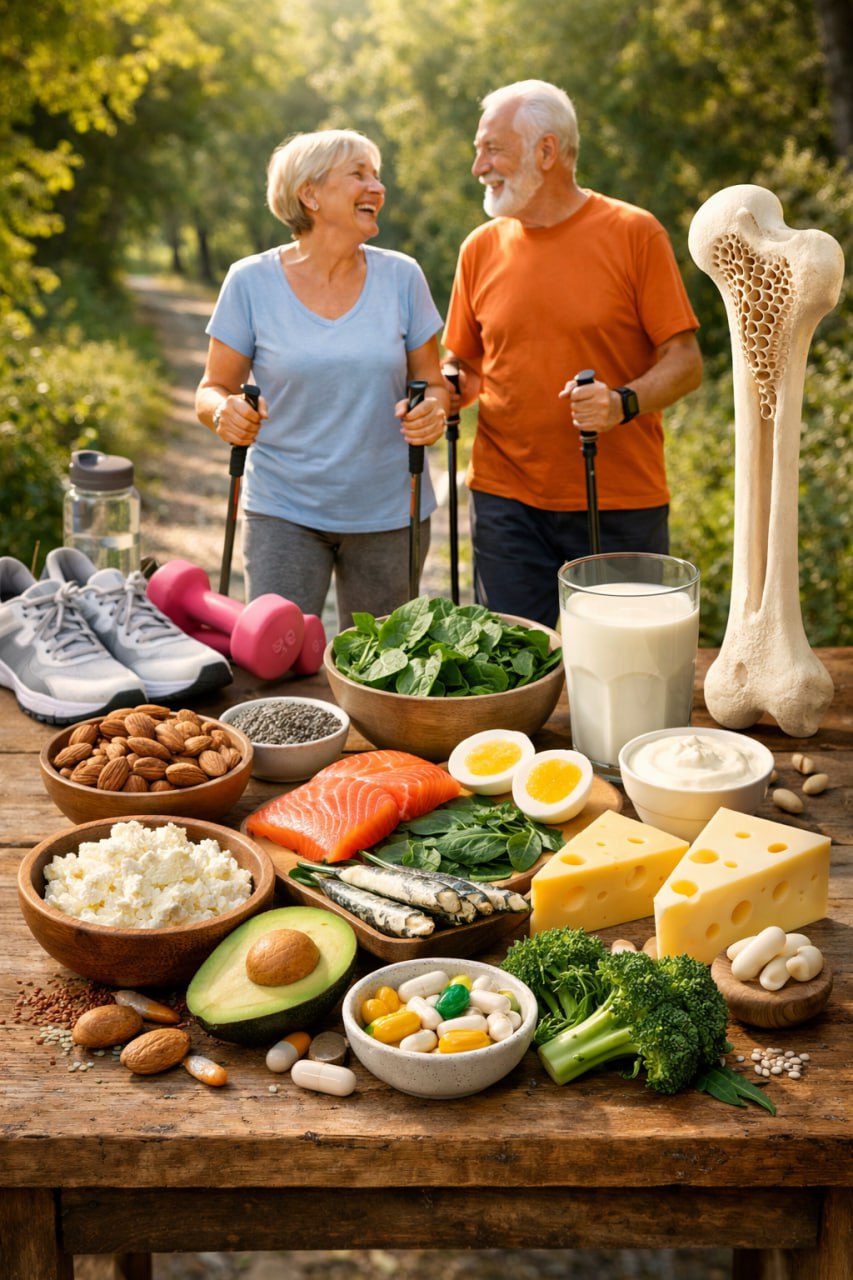
 Self-Care
 Strong To The Core
How to Build, Protect, and Preserve Bone Density—Naturally and Wisely
Bone health is often spoken about only when it begins to fail—after a fracture, a diagnosis of osteopenia, or the quiet onset of osteoporosis. Yet our bones are not static structures. They are living, responsive tissues that constantly remodel themselves in response to nutrition, movement, hormones, and lifestyle choices.
This article explores bone density in depth: what it is, why it matters at every stage of life, and—most importantly—how to strengthen and preserve it naturally through food, supplementation, movement, and daily habits. Whether you are in your twenties building peak bone mass, in midlife protecting what you’ve built, or later in life working to prevent loss, bone health is both reachable and reclaimable.
Understanding Bone Density: More Than Just “Strong Bones”
Bone density refers to the amount of mineral matter—primarily calcium and phosphorus—contained within bone tissue. The denser the bone, the stronger and more fracture-resistant it is.
Peak bone mass is typically achieved between the ages of 25 and 30. After this point, bone breakdown can begin to outpace bone formation unless intentional steps are taken to slow the process. Bone loss accelerates with:
- Aging
- Hormonal changes (especially menopause)
- Sedentary lifestyles
- Poor nutrient absorption
- Chronic inflammation
- Long-term stress and elevated cortisol
Importantly, osteoporosis does not happen overnight. It is the cumulative result of years of imbalance—making prevention and early support profoundly effective.
The Nutritional Foundation of Bone Strength
Calcium: Necessary, But Not Sufficient
Calcium is the most abundant mineral in the bones, yet supplementation alone does not guarantee strong bones. Without proper cofactors, calcium may fail to integrate into bone tissue—or worse, deposit in arteries and soft tissues.
Whole-food calcium sources include:
- Sardines (with bones)
- Dark leafy greens (kale, bok choy, collards)
- Sesame seeds and tahini
- Almonds
- Plain yoghurt and kefir
Absorption matters more than quantity.
Vitamin D: The Gatekeeper of Calcium Absorption
Vitamin D enables calcium absorption in the gut and plays a regulatory role in bone remodeling. Deficiency is widespread—even in sunny climates—due to indoor living, sunscreen use, and impaired conversion with age.
Natural sources:
- Sun exposure (15–30 minutes, depending on skin tone)
- Fatty fish (salmon, mackerel, sardines)
- Egg yolks
- Cod liver oil
Without sufficient vitamin D, calcium intake becomes largely ineffective.
Vitamin K2: The Bone Traffic Director
Vitamin K2 directs calcium into bones and out of arteries. It activates osteocalcin, a protein essential for binding calcium to the bone matrix.
Food sources:
- Natto (fermented soybeans)
- Aged cheeses
- Grass-fed butter
- Egg yolks
This nutrient is particularly critical when calcium and vitamin D are supplemented.
Magnesium: The Silent Bone Builder
Roughly 60% of magnesium in the body is stored in bones. It contributes to bone structure and supports vitamin D metabolism.
Rich sources:
- Pumpkin seeds
- Spinach
- Avocados
- Dark chocolate (high cacao)
- Whole grains
Magnesium deficiency is common and strongly linked to reduced bone density.
Protein: The Bone Scaffold
Bones are not made of minerals alone. Approximately 50% of bone volume is protein, primarily collagen. Inadequate protein intake weakens bone integrity and increases fracture risk.
Supportive sources:
- Free-range eggs
- Legumes
- Bone broth
- Fish
- Lean meats
Balanced protein intake supports both bone and muscle—critical for fall prevention.
Inflammation, Sugar, and Bone Loss
Chronic inflammation accelerates bone resorption. Diets high in refined sugar, ultra-processed foods, and excessive caffeine can disrupt calcium balance and increase urinary mineral loss.
Bone-supportive eating emphasizes:
- Anti-inflammatory fats (olive oil, omega-3s)
- Vegetables of all colours
- Adequate hydration
- Mineral-rich foods
Your bones respond not only to what you add—but also to what you reduce.
Movement: The Language Bones Understand
Bones strengthen in response to load and resistance. Without mechanical stress, they weaken—regardless of diet.
Weight-Bearing Exercises (All Adults)
These stimulate bone formation by working against gravity:
- Brisk walking
- Hiking
- Stair climbing
- Dancing
- Low-impact aerobics
Aim for consistency over intensity.
Resistance and Strength Training
Muscle contractions place healthy stress on bones, encouraging density and resilience.
Age-appropriate options include:
- Bodyweight exercises (squats, wall push-ups)
- Resistance bands
- Light to moderate free weights
- Pilates-based strength work
For older adults, supervised strength training significantly reduces fracture risk.
Balance, Coordination, and Fall Prevention
Fractures often result not from weak bones alone—but from falls.
Highly beneficial practices include:
- Tai Chi
- Yoga (with modifications)
- Balance drills
- Slow, controlled functional movements
Strong bones paired with stable balance create real-world protection.
Hormones, Stress, and Bone Health
Cortisol—the stress hormone—directly inhibits bone formation when chronically elevated. Long-term stress, poor sleep, and adrenal exhaustion quietly erode bone integrity.
Bone-supportive lifestyle practices include:
- Quality sleep
- Breathwork and nervous system regulation
- Gentle evening movement
- Emotional processing and stress reduction
Bone health is inseparable from nervous system health.
A Lifelong Relationship With Your Skeleton
Your bones carry your history—every step, every movement, every season of growth and loss. Caring for them is not about fear of aging, but about honouring the structure that holds you upright in the world.
With the right nourishment, movement, and awareness, bone density can be preserved—and in some cases improved—well into later life.
Strong bones are not built through force, but through consistent, intelligent care.
Bibliography / References
- National Institutes of Health (NIH). Bone Health and Osteoporosis: A Report of the Surgeon General.
- World Health Organization (WHO). Assessment of fracture risk and its application to screening for postmenopausal osteoporosis.
- Weaver, C. M., et al. (2016). Calcium plus vitamin D supplementation and risk of fractures. New England Journal of Medicine.
- Rizzoli, R., et al. (2014). Role of vitamin K in bone metabolism. Osteoporosis International.
- Bonjour, J. P. (2011). Protein intake and bone health. International Journal for Vitamin and Nutrition Research.
- Daly, R. M., & Giangregorio, L. (2014). Exercise and bone health. Journal of Osteoporosis.
- Heaney, R. P. (2009). Vitamin D and calcium interactions. Journal of the American College of Nutrition.
If this wisdom resonated with you, consider supporting the mission.



Stay in the loop
Join the circle and be the first to know when a new article is published or a new free e-book drops.
No spam. No selling your details. Just meaningful updates, when there's something worth sharing.
Unsubscribe anytime — one click, no questions asked.
You're in — welcome! 🌸
You'll hear from Nadia when something new is ready for you — a fresh article, a new e-book, or a moment of wisdom worth passing on.