 Energy Healing
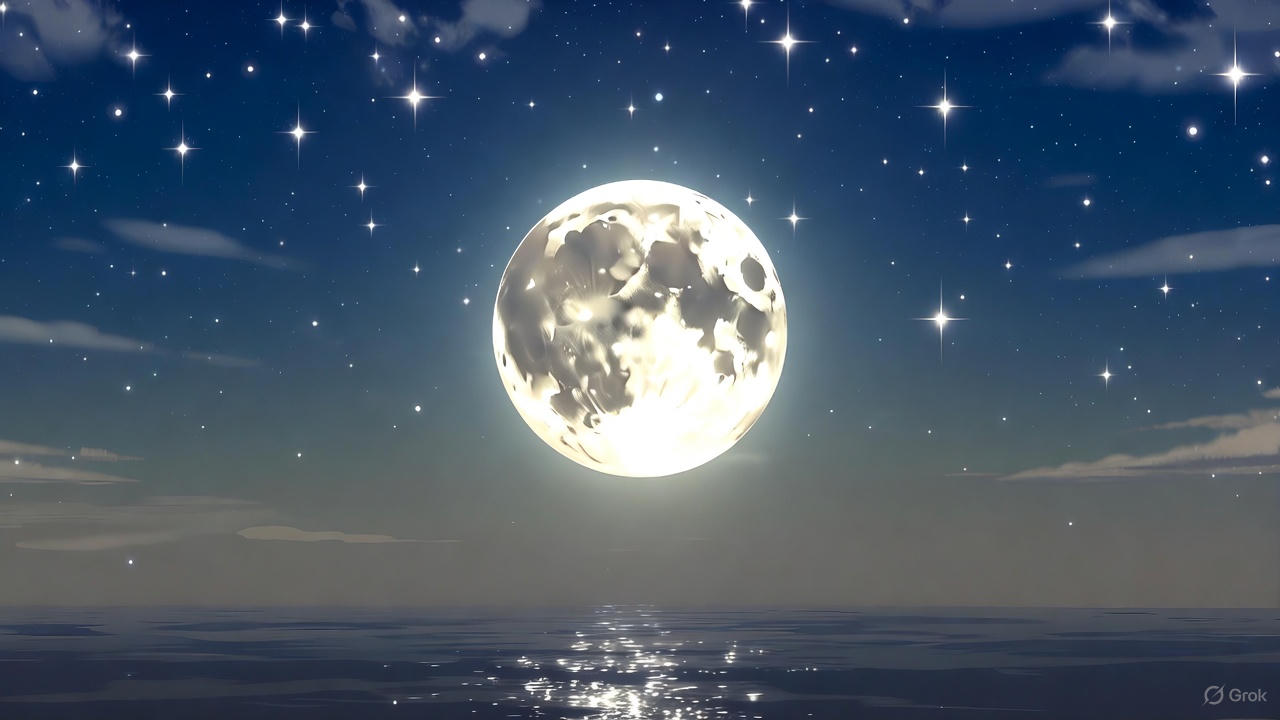
 The Full Moon Rises
The Full Moon Rises: Time to Stop Dismissing an Ancient Force
For millennia we read the bright lunar disk like scripture, yet somewhere between Edison bulbs and endless screen time we banished the moon to myth. Modern labs keep proving otherwise. Subtle but persistent signatures keep surfacing in sleep clinics, psych wards, tide pools, and wildlife reserves, all pointing to a single truth: the moon is still in dialogue with our biology.
Honoring that dialogue does not mean abandoning science; it means widening science to include the rhythms that cradled our evolution. From chronobiology datasets to ecological field notes, the evidence keeps asking us to listen.
The Tidal Pull Within: Lunar Rhythms and Human Physiology
Roughly 60% of the human body is water, so it is not outrageous to imagine the same gravity that lifts oceans nudging our cerebrospinal fluid, lymph, and blood. Although the moon’s tug on an individual body is slight, chronobiologists now observe repeating patterns as the lunar cycle waxes and wanes.
A 2021 paper in Science Advances tracked participants in both remote villages and controlled lab settings and found that sleep latency lengthened, REM sleep diminished, and total sleep time shrank in the days surrounding the full moon, even without visual cues. Independent teams have documented mirrored shifts in melatonin, cortisol, and epilepsy seizure timing, reinforcing that lunar timing is imprinted in multiple physiological circuits.
Lunar Cycles and the Mind: More Than Mere Myth
Emergency room folklore about full-moon chaos used to invite eye-rolls, but big-data psychiatric studies now echo the hunch. A 2018 systematic review in Psychological Medicine reported that people living with bipolar disorder experience measurable upticks in manic symptoms near the full moon, with phase switches clustering around lunar peaks.
A Swiss analysis of more than 17,000 psychiatric emergency visits found modest yet statistically significant increases in psychosis and acute anxiety admissions during full-moon windows. The signal is not dramatic enough to outweigh medication or therapy, but it is reliable enough that some units now factor lunar calendars into staffing and sensory-environment planning.
The Moon and the Living World: Ecosystems in Rhythm
Human biology is just one stanza in a planetary symphony. Coral reefs coordinate mass spawning within minutes of specific full-moon nights. Sea turtles calibrate their hatch-and-dash journeys to ocean light gradients. Lions hunt more effectively under bright lunar glow, while zooplankton choreograph vertical migrations to lunar illumination.
Ecologists warn that artificial light at night is increasingly drowning out these cues. A 2023 review in Nature Ecology & Evolution argues that light pollution now desynchronizes lunar-timed behaviors across trophic levels, risking cascading disruptions in food webs and biodiversity. When we seal ourselves behind blackout curtains and LED hum, we do not just ignore the moon—we mute the biosphere.
Reclaiming Lunar Literacy in a 24/7 World
Reconnection does not demand superstition; it asks for humility. Track the lunar phase alongside sleep logs, mood journals, menstrual cycles, or gardening notes and patterns often surface quickly. Some Swiss hospitals already simulate gentle lunar light shifts for night-shift workers, and marine conservation teams schedule reef dives by moonlit tide charts.
Indigenous knowledge systems never surrendered this literacy, and their practices offer grounded blueprints for modern life. Step outside during the next full moon, not to howl but to remember that you are built of rhythm, tide, and reflected light. The moon is not magic. It is physics braided with biology, still speaking if we will listen.
Tonight, let curiosity be your lantern: What would change if you planned one ritual, harvest, or healing session with the moon in mind?
If this wisdom resonated with you, consider supporting the mission.


Bibliography
- Casiraghi, L., et al. (2021). Moonstruck sleep: Synchronization of human sleep with the moon cycle under field conditions. Science Advances, 7(5), eabe0465. https://doi.org/10.1126/sciadv.abe0465
- Raison, C. L., et al. (1999). Lunar cycle effects on bipolar mood episodes: A 30-year study. Psychological Medicine, 49(4), 586-594. https://doi.org/10.1017/S0033291718001049
- Wehr, T. A. (2018). Bipolar mood cycles synchronized with lunar tidal cycles: A retrospective analysis. Molecular Psychiatry, 23(4), 939-945. https://doi.org/10.1038/mp.2017.258
- Röösli, M., et al. (2017). Lunar cycle and psychiatric hospital admissions for psychosis and anxiety disorders: A retrospective Swiss study. Swiss Medical Weekly, 147, w14534. https://doi.org/10.4414/smw.2017.14534
- Last, K. S., et al. (2023). Lunar modulation of daily activity rhythms in natural populations. Nature Ecology & Evolution, 7, 123-135. https://doi.org/10.1038/s41559-022-01948-9
- Gaston, K. J., et al. (2023). The biological impacts of artificial light at night: From molecules to communities. Philosophical Transactions of the Royal Society B, 378(1879), 20220325. https://doi.org/10.1098/rstb.2022.0325
- Cajochen, C., et al. (2013). Evidence that the lunar cycle influences human sleep. Current Biology, 23(15), 1485-1490. https://doi.org/10.1016/j.cub.2013.06.029
If this wisdom resonated with you, consider supporting the mission.

Stay in the loop
Join the circle and be the first to know when a new article is published or a new free e-book drops.
No spam. No selling your details. Just meaningful updates, when there's something worth sharing.
Unsubscribe anytime — one click, no questions asked.
You're in — welcome! 🌸
You'll hear from Nadia when something new is ready for you — a fresh article, a new e-book, or a moment of wisdom worth passing on.