 Personal Growth
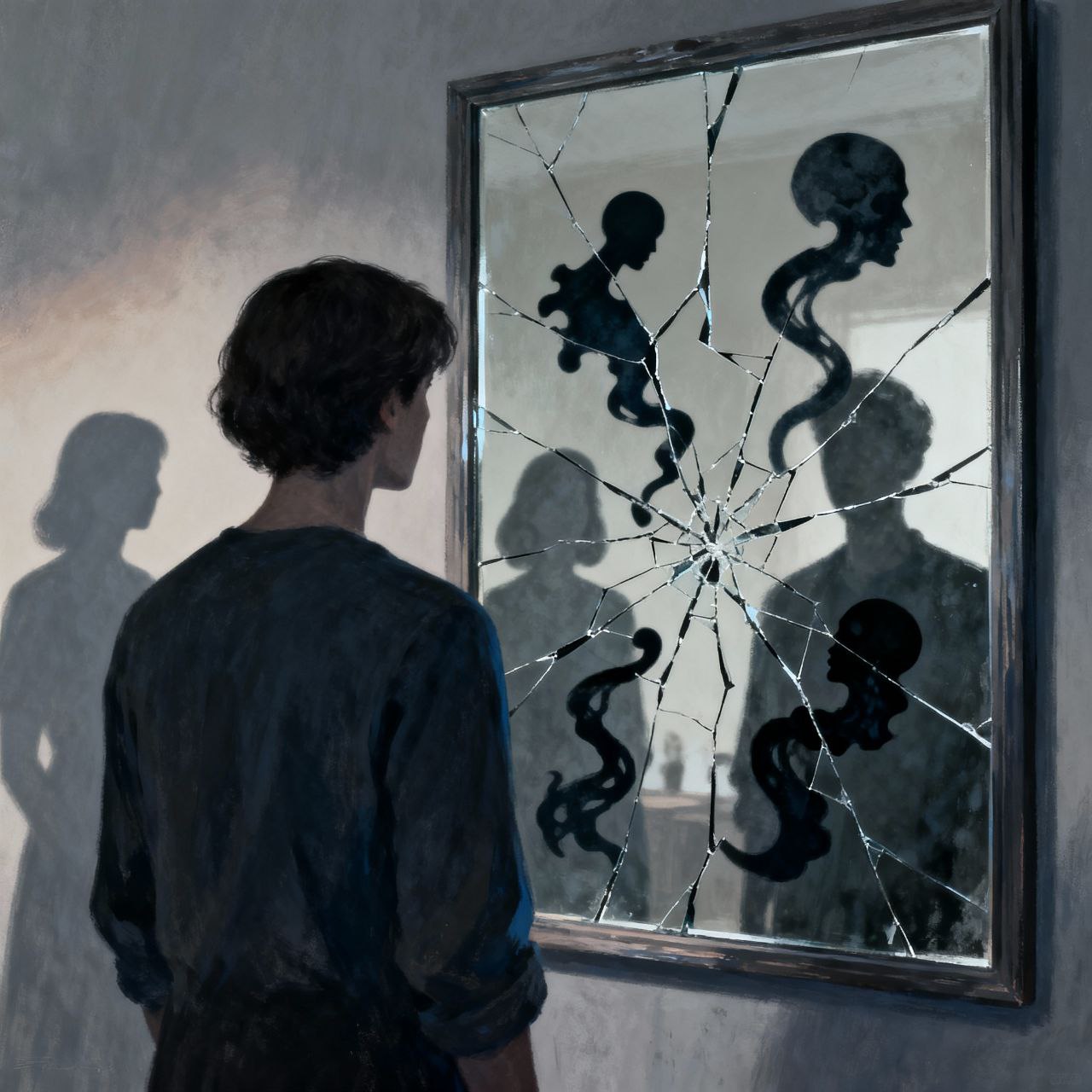
 The Unexamined Life: Perpetuating Shadows in the Light of Self-Awareness
Introduction
Imagine a man named Alex, raised in a household where his father’s explosive anger was as predictable as the evening news. As a child, Alex learned to tiptoe around outbursts, internalizing the belief that love meant enduring pain. Now, in his forties, Alex finds himself snapping at his own children over minor spills or forgotten chores, his voice echoing the thunder he once feared. His wife withdraws, the air in their home thick with unspoken resentment. Alex dismisses it as “just stress,” never pausing to trace the roots of his rage back to those formative years. This is the unexamined life in action—a cycle where unaddressed traumas, toxic traits, and shortcomings ripple outward, ensnaring loved ones in a web of inherited hurt. As Socrates famously declared, “The unexamined life is not worth living.” In modern psychological terms, failing to confront these inner demons doesn’t just stifle personal growth; it perpetuates patterns that harm individuals, families, and entire communities.
The Psychology Behind Unresolved Trauma
To understand this, we must delve into the psychology behind it. Unresolved trauma often stems from adverse childhood experiences (ACEs), such as abuse, neglect, or household dysfunction. These events shape our neural pathways, embedding survival mechanisms that become maladaptive in adulthood. For instance, a person like Alex might develop hypervigilance—a constant state of alertness to perceived threats—leading to reactive behaviors like irritability or control issues. Psychologically, this manifests through mechanisms like projection, where individuals unconsciously attribute their own unacceptable feelings to others, or repetition compulsion, a Freudian concept where people reenact traumatic scenarios in hopes of mastering them. Without self-examination—through therapy, journaling, or mindfulness—these traits fester, turning into toxic patterns such as emotional unavailability, manipulation, or aggression. Research from the American Psychological Association highlights how such unresolved issues can lead to intergenerational trauma, where parents’ unhealed wounds are transmitted to children via modeling and attachment styles.
Psychosomatic Effects: When Mind Becomes Body
The psychosomatic effects add another layer of immersion to this cycle, blurring the line between mind and body. Unresolved trauma triggers chronic stress responses, activating the hypothalamic-pituitary-adrenal (HPA) axis and flooding the system with cortisol. This can result in physical symptoms like headaches, gastrointestinal issues, or weakened immunity, even without an apparent medical cause. For Alex, his suppressed anger might manifest as hypertension or insomnia, his body screaming what his mind ignores. Studies show that posttraumatic stress disorder (PTSD) from unaddressed trauma correlates with somatic complaints, including increased risk of cardiovascular disease and autoimmune disorders. This mind-body echo isn’t abstract; it’s a tangible drain, where emotional repression somatizes into pain, further entrenching avoidance behaviors.
Intergenerational Transmission: Passing the Baton of Pain
These patterns don’t stop at the individual—they cascade through generations. In Alex’s case, his children absorb his explosive reactions, learning that conflict is resolved through dominance rather than dialogue. This is intergenerational transmission: trauma isn’t just genetic but epigenetic, altering gene expression without changing DNA, influenced by environmental stressors. Positive childhood experiences (PCEs) can buffer this, but without intervention, negative patterns dominate. Psychology Today explains that children of traumatized parents may inherit insecure attachment styles, leading to difficulties in forming healthy bonds later in life. Over time, this perpetuates a family legacy of dysfunction, where each generation unwittingly passes the baton of pain.
Ripple Effects on Loved Ones and Community
The ripple effects extend to those around the individual and the broader community. For loved ones, exposure to toxic traits erodes trust and safety. Alex’s wife might develop anxiety or depression from constant eggshell-walking, while his children could internalize low self-worth, affecting their peer relationships. On a communal level, these patterns contribute to societal issues like higher rates of domestic violence or workplace toxicity. Research indicates that perceived social isolation from toxic dynamics harms health as much as smoking or obesity, amplifying community-wide mental health burdens. In marginalized groups, intergenerational trauma from systemic oppression exacerbates disparities, affecting public health and social cohesion.
Impact on the Eight Dimensions of Wellness
This echo reverberates through every facet of life, touching all eight dimensions of wellness—a holistic framework encompassing emotional, physical, social, intellectual, spiritual, occupational, environmental, and financial well-being. Emotionally, unresolved issues breed instability, hindering self-compassion. Physically, psychosomatic ailments impair vitality. Socially, toxic traits isolate, straining relationships. Intellectually, hypervigilance stifles curiosity and learning. Spiritually, a sense of disconnection erodes purpose. Occupationally, patterns like procrastination or conflict lead to job instability. Environmentally, one might neglect surroundings, mirroring inner chaos. Financially, impulsive behaviors from trauma can result in debt or poor planning. Trauma disrupts this balance, creating a life of imbalance where wellness suffers holistically.
The Power of Change: Breaking the Cycle
Yet, herein lies the power of change. Examining one’s life isn’t a luxury; it’s a necessity for breaking the cycle. Start with self-reflection: Journal about triggers, seek therapy like cognitive-behavioral therapy (CBT) or eye movement desensitization and reprocessing (EMDR) to process traumas. Build support networks, practice mindfulness, and model vulnerability for loved ones. The journey is immersive—picture Alex, after therapy, apologizing to his family, fostering open dialogues that heal wounds. This not only liberates the individual but uplifts the community. If you’re ready to confront your shadows and embrace transformation, know that change is possible. Individuals who want to change can contact me for guidance on this path toward a examined, fulfilling life.
If this wisdom resonated with you, consider supporting the mission.



Stay in the loop
Join the circle and be the first to know when a new article is published or a new free e-book drops.
No spam. No selling your details. Just meaningful updates, when there's something worth sharing.
Unsubscribe anytime — one click, no questions asked.
You're in — welcome! 🌸
You'll hear from Nadia when something new is ready for you — a fresh article, a new e-book, or a moment of wisdom worth passing on.